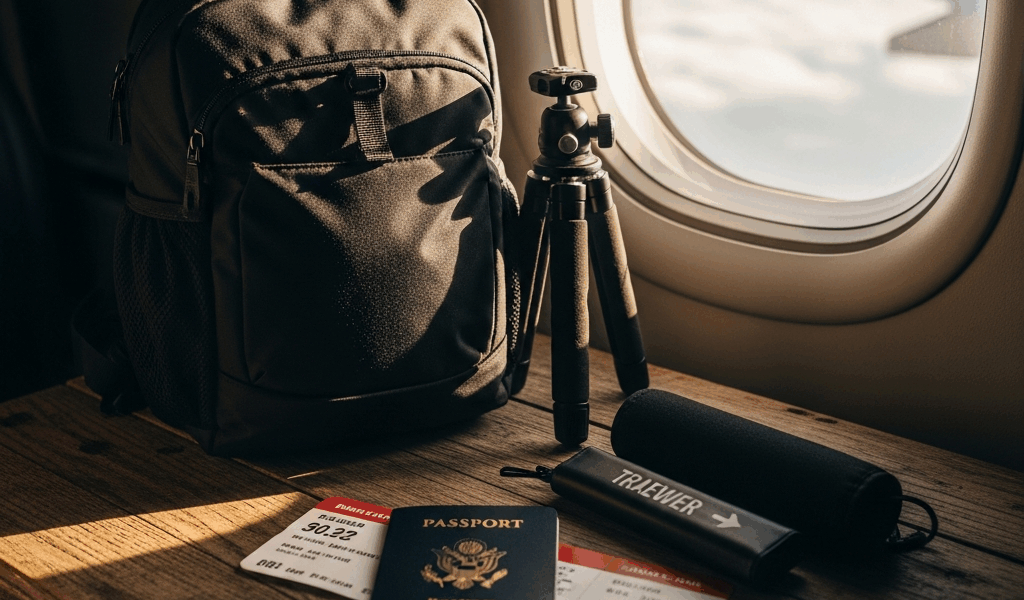
Why Travel Photographers Need Different Gifts
Travel photography has gotten complicated with all the generic gift guides flying around. I spent three years shooting assignments across 14 countries, and I learned everything there is to know about what actually matters to someone constantly moving. The constraints are completely different from studio work. Most gift guides show you a nice camera strap or a fancy lens cleaning kit — honestly, they miss the real problems: weight limits, durability under actual stress, and TSA approval.
Frustrated by endless airport security lines and broken gear in remote locations, I figured out what actually matters. Every single ounce counts when you’re checking bags or carrying gear on a 12-hour flight to Southeast Asia. A standard camera backpack weighs 5-6 pounds empty. That’s five pounds of your weight allowance gone before you pack a single lens. Durability becomes critical because repair shops don’t exist in the middle of rural Vietnam — you need gear that survives getting tossed in cargo holds, sat on in crowded trains, and exposed to 90% humidity in Bangkok hotel rooms.
Multi-climate functionality separates useful gifts from novelty items sitting in a drawer. A cleaning kit designed for dry studio conditions won’t help you remove salt spray in Iceland or dust storms in Morocco. A tripod needs to be compact but stable in 40 mph winds, not just functional in calm studio settings. And here’s what most guides completely skip: travel photographers deal with TSA screening stress. Gear that requires quick removal or triggers additional screening becomes genuinely unwelcome.
Portable Camera Bags Under 3 Pounds
Probably should have opened with this section, honestly. The bag is your foundation. Everything else fits inside it or straps to it, so if the bag sucks, the gift fails immediately.
The Peak Design Everyday Backpack Zip weighs 2.5 pounds and measures 16 x 10 x 6 inches. It holds two camera bodies and four lenses comfortably, with enough room for a 13-inch laptop. Here’s what matters for travel: the weatherproof fabric is genuinely water-resistant — I tested it during monsoon season in Thailand — and TSA PreCheck agents don’t ask me to remove it from the scanner. It costs $235, which feels steep until you realize you’re using it daily for years. The Capture Clip accessory ($30) attaches externally for quick access, which saves you from opening the bag at every scenic stop.
If they prefer a sling style, the Ona The Bowery bag weighs 2.8 pounds and has a canvas exterior that looks like genuine photography equipment rather than tactical gear. Real-world detail: the leather accents scratch and patina beautifully. This sounds cosmetic until you realize it makes a five-year-old bag look intentionally worn rather than neglected. Capacity is smaller — one body, three lenses — but that’s the trade-off for weight. It costs $349.
The budget option is the Lowepro ProTactic SH 120 AW II at 1.8 pounds and $70. Don’t make my mistake of dismissing it. The 120 AW II survived two years of my travel shooting before I upgraded. Weatherproofing isn’t as robust as Peak Design, but it’s adequate for most climates. The construction is straightforward — less features, less weight. Perfect for someone who doesn’t need connectivity features or modular organization.
Travel-Proof Cleaning and Maintenance Gear
Cleaning equipment becomes critical in different environments. Sand, salt, humidity, dust — each climate demands different tools. Generic lens cleaning kits fail because they’re designed for indoor use.
The Giottos Rocket Air Blower is 4.2 ounces and works across every climate. Unlike electric air blowers, it requires zero batteries or charging — which means zero TSA concerns. I’ve used the same Rocket for five years without a single failure. It costs $15. The design is simple: squeeze it to blast air, release to refill. No moving parts. No batteries. No excuses. Every travel photographer owns one.
For wet climates, the LensRentals Sensor Cleaning Kit costs $9 and includes sensor swabs sized for different sensor dimensions. Proper sensor cleaning prevents dust from embedding into photos during weeks-long trips. The swabs are individually packaged and last through multiple uses if you’re careful. This feels like a boring gift until they’re shooting in 90% humidity and their autofocus starts misfiring due to dust on the sensor.
Waterproof pouches matter more than people realize. The Aquatech Hard Lens Case (model 4047) weighs 7 ounces and protects a 24-70mm lens from saltwater, sand, and humidity. The sealed closure prevents moisture from entering during overnight storage in humid hotel rooms. It’s $65. I learned this lesson the hard way when fungus grew inside a lens stored without protection in Bangkok.
Include a pack of Zeiss Microfiber Cleaning Cloths ($6 for three). They actually fit in camera bags without adding bulk, unlike generic cleaning cloths that take up unnecessary space. Specificity matters here — naming the exact product prevents them from substituting with inferior alternatives.
Non-Gear Gifts That Hit Different
Equipment only goes so far. The best gifts solve problems that equipment can’t address.
Photography workshops in destination cities change how someone shoots. A five-day workshop in Marrakech or Tokyo isn’t just about learning composition — it’s about shooting with a guide who knows where to position yourself without tourists blocking the frame. Platforms like Workshop Retreats and Photographic Adventures offer curated trips priced $2,500–$5,500. Slightly expensive as a gift, sure, but split among a group of friends, it becomes reasonable. The workshop fee typically includes accommodations, meals, and guided shoots.
Lightroom preset bundles address a real workflow problem. Travel photographers often shoot in inconsistent lighting conditions — monsoon light one day, desert harsh sun the next. A preset bundle like Mastin Labs presets ($89–$149) or Peter McKinnon’s preset pack ($39) standardizes color grading across different climates and lighting. This saves 10-15 minutes per image during post-processing. For someone editing hundreds of travel photos, that’s genuine time savings.
Travel insurance specifically designed for photography equipment is valuable. World Nomads covers cameras and lenses under their adventure sports coverage. A one-month policy costs $20–$35 depending on coverage level. For a $3,000 camera setup, that’s essential protection. You can buy a policy as a gift by purchasing a code and sending it.
Portable power banks rated for camera batteries solve a practical problem. The Anker PowerCore 26800 weighs 1.3 pounds and charges a Sony A7R battery roughly four times. It costs $45. The USB-C connector is standard across modern cameras, which means one charger handles phone, camera battery, and backup power. Weight-conscious travelers appreciate the math.
Cloud storage subscriptions keep images safe during travel. Adobe Creative Cloud Photography plan ($10/month) includes 20GB Lightroom storage plus 1TB OneDrive storage. During a long trip, cloud backup prevents catastrophic loss if a card corrupts. A 12-month gift card ($120) shows you understand digital security concerns.
The Gift That Keeps Giving
The best gifts create ongoing value rather than one-time use. Subscriptions and memberships accomplish this.
A year of Adobe Creative Cloud Photography plan ($120 gift card) keeps paying dividends. They access Lightroom everywhere, sync edits across devices, and never stress about backing up files. The subscription model feels expensive until you realize they’re spending $10 monthly on something they’d otherwise pay $1,200 for as a perpetual license.
Membership in a stock photography platform like Shutterstock or Getty Images Pro gives them revenue from travel photos. Shutterstock contributor membership costs $60 upfront plus $168/year. Travel photographers already shoot constantly — monetizing that work makes sense. Revenue potential depends on content quality, but a popular series of travel images can generate $50–$200 monthly passively.
Travel photography insurance bundles offer continuous protection. World Nomads annual plan ($600–$1,200) covers equipment theft and damage across multiple trips. Instead of buying single policies per trip, an annual membership simplifies coverage and reduces per-trip costs.
Remote backup services like Backblaze ($7/month) ensure their entire photo library syncs automatically. During travel, this eliminates anxiety about losing months of work if a device fails. A 12-month gift card ($84) is affordable and genuinely protective.
The most thoughtful gift combines categories. Pair a lightweight bag with a cloud storage subscription and a cleaning kit. That’s comprehensive, practical, and shows you understand travel photography constraints specifically. Generic photography gifts often miss the point. Travel photographers face unique problems — weight limits, durability demands, multi-climate functionality, and security concerns. Gifts addressing these specific constraints actually get used instead of sitting in a drawer.




Stay in the loop
Get the latest suggest a gift updates delivered to your inbox.