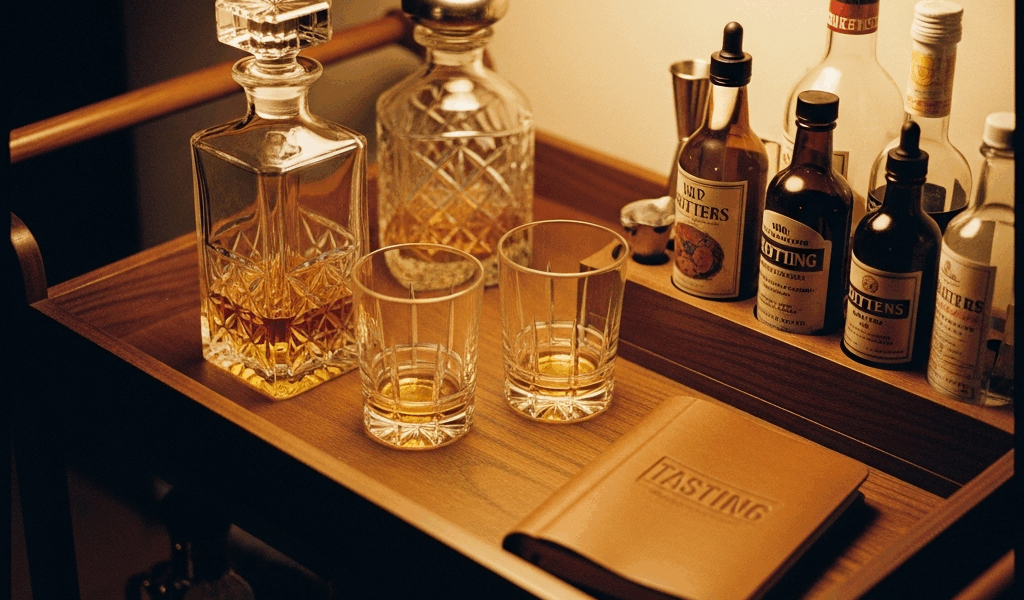
Why Whiskey Gifts Have Gotten Complicated
Whiskey gifting has gotten complicated with all the premium releases, allocated bottles, and gear obsession flying around. I learned this the hard way — showed up to my friend Derek’s birthday with a bottle of Maker’s Mark, feeling pretty good about myself, only to find his cabinet already housed three versions of it. Plus a rare 2019 Buffalo Trace release that cost more than my car payment. That was a humbling evening.
This article includes affiliate links. We may earn a commission at no extra cost to you.
The problem isn’t that options are scarce. It’s that whiskey drinkers fall into roughly three camps, and a gift that genuinely thrills a collector will bore a sipper into polite nodding. A $150 glassware set feels like a joke to someone whose bar cart already looks like it belongs behind a hotel counter.
So instead of another list sorted by price range, let’s go by personality. The collector. The sipper. The home bartender. Find your person first. Then find the thing that actually lands.
For the Collector — Bottles and Experiences Worth Owning
Collectors don’t need another whiskey. They need the whiskey — the allocated release, the limited-batch anomaly, the bottle with a story that makes their collection feel more complete rather than just larger.
The trap most gift-givers fall into is buying whatever’s sitting on the shelf at the local shop. Collectors have systems. They track releases. They’re on waiting lists for bottles that haven’t been announced yet. A random Highland Park 12 Year Old, however nice, reads as a non-gift. It reads as something they already own or could grab themselves in five minutes on a Tuesday.
Consider these lanes instead:
- Distillery bottlings and limited releases — Places like Glenmorangie Signet ($200–250), Balvenie PortWood 21 Year Old ($350–400), or Japan’s Hibiki 30 Year Old ($2,000+) are allocated through specific retailers. You can’t just grab them. For Scotch collectors specifically, a single-barrel indie bottling from Signatory or Gordon & MacPhail — typically $60–120 — gives them something genuinely hard to replicate. Personal note: I once spent six months hunting a particular Springbank bottling. When a friend finally found it and handed it to me at Christmas, I didn’t crack it open for a full year. I was saving the moment. That’s how collectors think. The bottle isn’t the point. The story around it is.
- Tasting membership or distillery experience — Johnnie Walker’s Master of Whisky program, Macallan’s whisky school, or a properly ambitious day trip to Islay runs $500–2,000+ depending on how far you’re willing to go. The experience becomes part of their story, not just another item on their shelf. Better yet: some distilleries now offer private barrel selections where your collector literally puts their name on a cask. Glenfiddich and The Balvenie do this regularly. That’s not a gift. That’s a legacy item.
- A rare miniature or closed distillery pour — Budget tighter? A discontinued distillery release like Brora 26 Year Old — typically $500–800 for a full bottle, $80–150 for a 50ml sample — satisfies the rarity itch without requiring a second mortgage. Closed distilleries like Rosebank, Port Ellen, and Clynelish command collector premiums for legitimate reasons. The liquid stops existing. Demand never does.
Price anchor for this persona: $120–500 covers most gift scenarios comfortably. Push past that, and you’re competing with their own purchasing power and deeply personal taste preferences. Probably not a fight worth having.
For the Sipper — Gear That Actually Changes the Glass
Sippers care less about owning rare bottles and more about the ritual. The warm glass. The slow Tuesday evening. The right vessel for the right pour. Good gear becomes genuinely transformative here — not decorative, not performative. Transformative.
Probably should have opened with this section, honestly. Most people gift whiskey to sippers without realizing that’s who they’re buying for. They assume the sipper wants another bottle. Wrong. They want to taste what they already own more deeply.
- Premium glassware — Glencairn or tulip shape — A standard Glencairn glass set runs $8–15 per glass. The upgrade move: Riedel Vinum Single Malt glasses ($60–80 per glass — buy at least two, don’t be weird about it) or Spanish copita glasses at $40–50. Wider bowl, narrower nose. Captures aroma without blasting you with alcohol burn. I tested both against cheap rocks glasses using a 16-year Highland single malt, and the difference in how it actually tasted was genuinely surprising. Not snobbery. Physics.
- Whiskey flight set with proper pourers — A set from brands like Lyandy or Mocktail (usually $35–70) includes four matching glasses, pourers, and typically a wooden serving board. Perfect for the sipper who likes comparing two drams side-by-side on a Friday night. Makes drinking feel intentional rather than accidental.
- Ice tools — sphere molds or king-cube trays — Larger, denser ice melts slower. That matters enormously when someone sits with their drink instead of gulping it. A Wintersmiths ice ball maker ($25–35) or a Kold Draft tray from Cocktail Kingdom ($60) sounds like overkill until you realize it preserves a $50 pour for an entire evening rather than diluting it into mediocrity in 15 minutes. Don’t make my mistake — I used regular ice on a 18-year Glenlivet for two years before someone staged an intervention.
- Whiskey decanter — functional and beautiful — Not for aging (whiskey doesn’t improve in glass, full stop), but for display and pouring grace. A quality piece from Waterford, Rogaska, or mid-tier crystal runs $80–180. Sounds excessive until you experience how much nicer a pour feels from something intentional rather than a random bottle with a peel-damaged label.
Safest play in this category: pair quality Riedel glasses with a Wintersmiths ice mold. Under $100 total. Actually gets used. Shows you understand how they drink — not just that they drink.
For the Home Bartender — Cocktail-Forward Picks
Home bartenders view whiskey as a tool, not a trophy. They want to build something. Develop something. A recipe, a ratio, a variation on a classic that nobody else has cracked yet. This persona is already mixing, so gifts should either expand their toolkit or sharpen their knowledge base.
- Premium bitters and modifier set — Regan’s Orange Bitters, Fee Brothers, Angostura — most bartenders own the basics. The move: a curated set like the Bitter End collection or a wood box from Scrappy’s or The Bitter End ($40–90). Bitters are the salt and pepper of cocktails. Quality bitters are the difference between a competent whiskey sour and an electric one. I’m apparently a Scrappy’s person, and their cardamom bitters changed how I think about a Manhattan. The Angostura I used before never did that.
- Whiskey-focused cocktail book — not generic — Skip the coffee-table editions. Get specific: Whiskey Smash by Thom Easton ($30), The Bourbon Cocktail by Fred Minnick ($25), or Healing Cocktails by Pip Christiansen ($35). These go deep into particular whiskey styles and how to build around them. A home bartender will actually cook through these, not just photograph them for a shelf.
- Japanese bar tools or a quality mixing glass — Brands like Yarai or Teardrop produce mixing glasses and bar spoons that run $80–180 but perform noticeably better than basic equipment. A barspoon with proper weight, a channel knife, a Japanese jigger set — these are the difference between looking like you know what you’re doing and actually knowing. I was skeptical until I used a proper Yarai mixing glass for the first time. The angle, the weight, how liquid actually responds in your hand — it matters more than I expected.
- Quality mixer or tonic subscription — Premium ginger beer from Fever-Tree or Q Mixers ($8–12 per bottle, $80–120 for a quarterly delivery) paired with the right whiskey transforms a simple cocktail entirely. Some home bartenders overlook how much a great mixer elevates their work. This gift says something specific: “I understand your craft goes beyond the spirit itself.” That lands differently than another bottle.
Budget range: $40–150. Under $40, lean bitters or a specific cocktail book. Over $100, invest in bar tools or a subscription service. Simple math.
How to Pick When You Don’t Know Their Preferences
Maybe you don’t know if they’re a Scotch purist, a bourbon devotee, a Japanese whisky enthusiast, or an Irish whiskey person. Fair. Here’s a filter that actually works.
Ask yourself one question: do they talk about how whiskey is made, or do they just drink it? If they riff on terroir, finish types, and cask impact — they’re a collector or sipper. If they’re always experimenting with ratios and recipes and asking where to find obscure bitters — they’re a home bartender. If they do both, you’re buying for someone sophisticated enough to appreciate either a curated bottle experience or premium glassware. Either way, don’t guess blindly.
The safest all-around gift if you’re genuinely stuck: a pair of Riedel Single Malt glasses ($120–150 for two) plus a Wintersmiths ice mold ($30). That’s it. Works across all three personas without fail. It signals that you thought about how they drink — not just that they drink. A collector appreciates the ritual upgrade. A sipper loves the enhanced experience. A home bartender sees better glasses as a tool investment. Everyone walks away feeling seen. Nobody politely pretends to be excited about something already occupying three spots in their cabinet.
That’s the real principle here. Context beats commodity every time. Pick the person first, then pick the gift. Whiskey lovers who already have everything don’t need more whiskey — they need something that deepens how they experience what they already own.



Stay in the loop
Get the latest suggest a gift updates delivered to your inbox.