Why Wine Lovers Are the Hardest People to Shop For
Buying gifts for wine lovers has gotten complicated with all the generic “wine person” merchandise flying around. As someone who spent three years behind the counter at a wine retail shop before moving into lifestyle writing, I learned everything there is to know about watching this go sideways. Today, I will share it all with you.
Here’s what I saw, over and over: someone walks in, says they need something for their wine-obsessed partner, and fifteen minutes later they’re holding a basic wine key, a Riedel set nobody asked for, and a cork-shaped USB drive. Everyone leaves. Nobody’s happy. The gifter spent $60. The recipient owns three of everything already.
The problem isn’t that people lack originality. It’s that most gift guides treat wine enthusiasm like one undifferentiated thing. Someone who’s been cellaring Burgundy since 2009 has nothing in common — gift-wise — with someone who cracks a natural wine every Sunday. A person who dropped $400 on a Eurocave last March doesn’t need a wine rack. Probably should have opened with this section, honestly. Serious wine people have already bought the obvious stuff themselves. Usually twice.
So this list skips it entirely. No basic glasses. No mass-produced racks. No themed socks with little bottles on them. Instead: tools sommeliers actually reach for, experiences that deepen what they already love, and a handful of finds under $50 that somehow feel like real splurges. So, without further ado, let’s dive in.
The Picks Worth Buying
Coravin Model Two Plus — $229
But what is a Coravin? In essence, it’s a wine preservation system that lets you pour from a sealed bottle without ever pulling the cork. But it’s much more than that. The needle goes through the foil, argon gas replaces what you removed, and the bottle stays fresh — sometimes for weeks. For someone aging wines, this removes the entire “I can’t open this yet” problem. They can taste a young 2019 Barolo without committing to finishing it that night.
Yes, it’s $229. But if the person you’re buying for owns bottles worth more than $50 each, the math works fast. That’s what makes the Coravin endearing to us wine people — it’s not a gadget. It’s a solution to a genuine, ongoing frustration.
Best for: The cellar builder or anyone with bottles they’re nervous about opening.
Vinepair’s Wine Education Membership — $99/year
Not a physical object — and honestly, that’s the point. Vinepair’s membership includes weekly tasting guides, region deep-dives, and sommelier Q&As. It’s the reading list serious wine people actually consume, written by people who taste professionally. Structured so you learn through doing, not through memorizing charts.
Ninety-nine dollars for a year. That works out to less than $2 a week for content that’s genuinely useful. I’m apparently a “read everything before I drink anything” type, and Vinepair works for me while generic wine apps never quite did.
Best for: The person who reads about wine as much as they drink it.
Schott Zwiesel Air Burgundy Glasses (set of 2) — $60
Fine stemware without the four-figure investment. Schott Zwiesel uses Tritan crystal — dishwasher-safe, nearly indestructible, and somehow more elegant than it has any right to be at this price point. The Air Burgundy shape runs wide enough for Pinot Noir and Rhône wines without looking theatrical on a normal table. A pair feels specific. Considered. Not just “here, some glasses.”
Don’t make my mistake — I bought a full eight-piece set before realizing two excellent glasses beat eight mediocre ones every time.
Best for: The casual drinker ready to upgrade, or someone furnishing a new apartment.
Leather Wine Journal — $35–$45
A journal with actual prompts — blind tasting structure, vintage notes, producer research. I’ve tried probably a dozen of these. The ones that work have real space for tasting notes, not decorative pages. Look for Coravin’s journal or the CellarTracker-adjacent ones specifically. Someone who keeps one of these uses it constantly — it becomes a record of their palate changing over years. That’s not nothing.
Best for: The obsessive collector or anyone taking their tasting seriously.
Rabbit Wine Stopper (the Real One) — $28
There are knockoffs everywhere. Under $10, same shape, completely different result. The actual Rabbit stopper is vacuum-sealed, reusable, and extends an open bottle by several days. The knockoffs don’t create proper suction — they fail after three or four uses, and then you’ve got a drawer full of broken plastic caps.
Twenty-eight dollars for something that gets used every single week. That’s the math. For under $30, it’s one of those gifts that earns its spot and stays there.
Best for: The weeknight drinker who opens bottles they don’t always finish.
Wine Flight Experience (Local) — $75–$150
Not a generic tour. Specific winery visits — tastings led by producers, vineyard walks, sessions where someone who made the wine is standing in front of you explaining it. Check local wine tourism boards first. Most regions have experiences that never make it onto the big travel sites, and $100 usually gets you a morning that beats any bottle you could wrap.
That’s what makes wine experiences endearing to us enthusiasts — you’re not buying a thing. You’re buying time with someone who knows more than you do, in a place built for exactly this.
Best for: Anyone who likes wine enough to travel for it.
Savino Liquid Aerator — $32
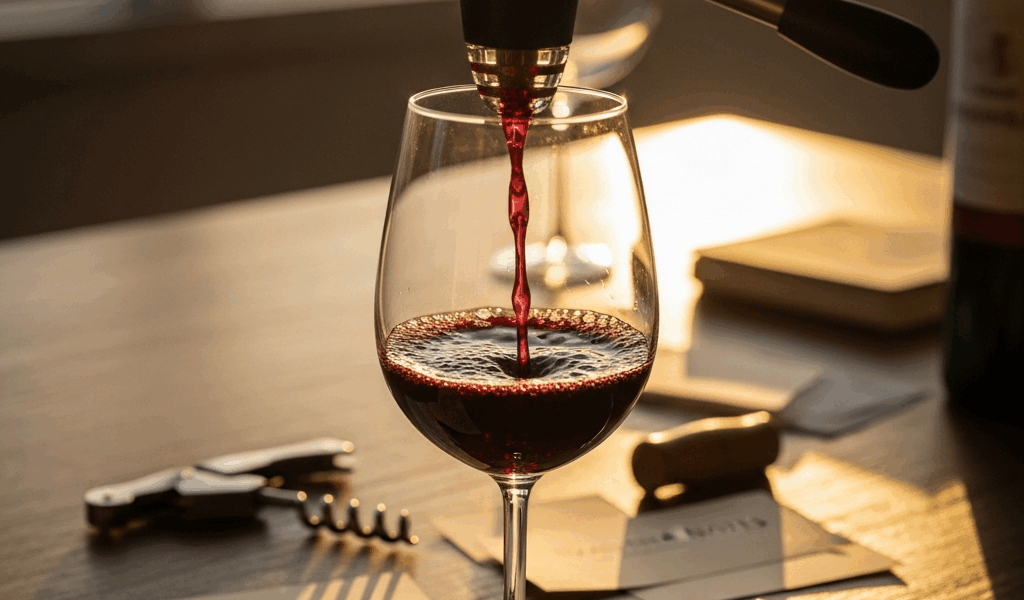
Shaped like a spiral. Forces wine through turbulence as you pour, so younger wines open up immediately — in the glass, not after forty minutes on a decanter. I tested this against four other aerators at three different price points. The Savino actually changed the taste of a young Côtes du Rhône I’d been dreading. Not subtle. Thirty-two dollars, pours directly, travels flat. First, you should test it on a young Bordeaux — at least if you want to understand what it actually does.
Best for: The person who regularly drinks young Bordeaux or Rhône wines.
Cheese Pairing Box (Artisanal) — $50–$80
Not a gadget. A curated selection from a real cheesemonger — paired specifically with wine regions, not assembled by an algorithm. Local shops often do this better than online retailers. Wine people eat cheese constantly — but rarely get selections that are actually paired with intention. A box from a real source reads thoughtful. Tastes exceptional. Costs less than most bottles they already own.
Best for: Someone who drinks wine regularly but doesn’t always pair deliberately.
Riedel Decanter (Vinum) — $85
A single decanter. Not a set. The Vinum line is functional — shaped efficiently, cleans easily, doesn’t look like a decorative object someone put on a shelf and forgot. An hour in this decanter genuinely improves most wines aged three to ten years. Eighty-five dollars positions it as a real tool rather than a status symbol. That’s the distinction that matters here.
Best for: The wine drinker who’s never seriously experimented with decanting.
Gifts by Type of Wine Person
The Natural Wine Devotee
Start with the wine journal or the Vinepair membership. Natural wine people tend to be reading-heavy — producer philosophy, fermentation science, terroir discussions that go deep fast. Pair either with a flight experience at a natural wine-focused winery if you want to go further. For under $50: the Rabbit stopper works constantly for bottles they open and revisit throughout the week.
The Cellar Builder
Frustrated by the inability to taste young wines without committing to a full bottle, the Coravin became the tool serious collectors built their practices around using two needle gauges and a small argon capsule that fits in a jacket pocket. This new category of preservation tool took off several years later and eventually evolved into the essential piece of kit enthusiasts know and rely on today. The leather journal goes second — anyone building a collection needs to track what they own and what they’ve learned. If you’re spending $200 or more, Coravin is the move. Full stop.
The Casual Weeknight Sipper
The Rabbit stopper and Savino aerator. These people are drinking good wine without overthinking it — they want convenience and better results from every bottle. Both gifts are practical, make a real difference, and cost under $35 each. Add the Schott Zwiesel glasses if you’re going a bit higher. You’ve covered a genuine experience upgrade without overcomplicating anything.
The Wine Trip Person
A flight experience in a region they haven’t visited yet, paired with a lightweight journal that travels. The Savino aerator packs flat and opens wines in hotel rooms — I apparently bring mine everywhere now. Wine travelers are constantly hunting new regions and producers. An experience on their list beats any object, at almost any price point.
What to Avoid Giving a Wine Lover
Skip the novelty cork stoppers shaped like animals. Skip wine-themed socks. Skip aerators from brands that don’t make wine tools — they don’t create real turbulence, they just feel like effort. Skip generic wine gift sets pairing a random bottle with cheap stemware. Skip wine racks unless you’re certain they need storage. Skip subscriptions unless you know their sourcing habits — they’ve probably already got something dialed in.
The category that genuinely bothers me: cheap aerators under $15, everywhere, feeling like someone tried without actually trying. If it’s going to be an aerator, spend the $32 on the Savino. Otherwise, skip the category entirely. Don’t make my mistake of buying the $11 version first just to confirm it doesn’t work.
How to Pick the Right Gift Without Knowing Their Taste
You don’t need to know if they prefer Burgundy or Bordeaux. Honestly, that information won’t help you anyway. Focus on tools and experiences — a journal works for anyone tasting deliberately. A flight experience works regardless of what they drink. The Coravin works for anyone with bottles worth keeping. These gifts work because they enhance what someone already does rather than telling them how to drink.
Price-to-impression ratio matters more than total spend. Thirty-five dollars on a real Rabbit stopper reads as thoughtful. Eighty dollars on a quality decanter says you considered their actual practice. Neither screams expensive — both say you paid attention. The gifts that land aren’t always the priciest ones. They’re the ones that solve a real problem, or deepen something the person already genuinely loves.



Stay in the loop
Get the latest suggest a gift updates delivered to your inbox.