Gifts That Actually Enhance Wine Tasting
Wine tasting has gotten complicated with all the novelty nonsense flying around. I learned everything there is to know about this after buying my wine-obsessed brother a corkscrew shaped like a waiter’s dream only to watch him pull out a Laguiole minutes later. His polite smile said everything — and I mean everything.
Serious wine tasters aren’t looking for decorative pieces. They’re the people who keep detailed notes, maintain temperature-controlled storage, or host regular tastings. They’ve already got the basic tools sitting around somewhere. What they actually need are the devices and experiences that deepen their understanding of what’s in the glass.
That’s what makes this distinction endearing to us gift-givers. A decorative wine rack looks nice on Instagram. A vacuum sealer for opened bottles? That actually preserves your Barolo for three more days instead of turning it into vinegar overnight. One creates visual noise. The other gets used three times a week without fail.
The buyer persona here is specific: someone who owns a wine fridge, reads tasting notes before opening a bottle, or can explain the difference between malolactic fermentation and why it changes mouthfeel. They attend tastings, not just dinners. They keep a spreadsheet. Maybe they’re studying for their Level 1 Sommelier certification. These are people who view wine as something to understand, not just consume.
Premium Wine Aerators and Pourers
Aeration is where most wine gifts fall apart. People buy those chunky aerators that look like sculptures and actually slow down the pour while delivering inconsistent oxygen exposure. Wrong move.
A quality aerator matters because oxygenation breaks down tannins and releases volatile compounds that create flavor perception. Younger wines especially benefit from this — at least if you want to experience what they’re actually supposed to taste like. Watching a wine open in the glass over 20 minutes is part of the tasting experience for serious enthusiasts.
The Coravin Model Two+ runs $299. It’s essentially a needle that pierces the foil and cork without removing either, letting you pour by the glass while inert gas keeps the bottle fresh for weeks. I watched someone use this at a tasting seminar and immediately understood why wine collectors swear by it. You can taste vertical vintages without opening multiple bottles. For someone with a collection worth protecting, this is indispensable.
The Vinturi Essential ($35–$50) is the practical middle ground. It uses gravity and the Bernoulli principle to pull air into the wine as it pours. Takes 10 seconds. Works on most wines. No learning curve, which means actual use instead of shelf decoration.
Aerating carafes like the Riedel Decanter ($80–$150) serve double duty. They look elegant on the table and genuinely open up wine through surface area exposure. A serious taster will use this multiple times monthly. The weight and balance matter — cheap carafes feel flimsy when you’re handling a $60 bottle.
Probably should have opened with this section, honestly. Aerators solve a real problem for wine enthusiasts and work every single time, unlike those novelty stoppers that look cool but don’t actually seal bottles properly.
Serious Somm Tools for Home Tasting
The deeper someone gets into wine, the more they care about conditions and documentation.
Wine thermometers aren’t just for temperature — they’re about consistency. Tasting wine at 45°F versus 55°F changes the entire sensory experience. A basic digital thermometer runs $12–$20. The Hadora Stainless Steel Thermometer ($25) fits directly into the bottle and gives instant readings. Someone doing side-by-side tastings needs this.
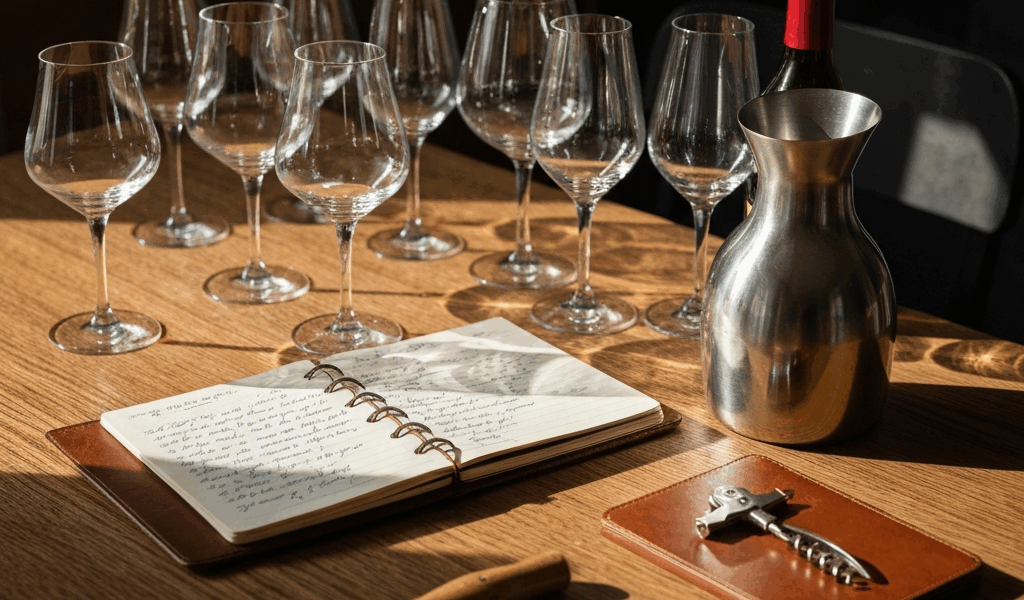
Tasting journals transform passive drinking into active learning. The Vinea Journal ($24) or even a leather-bound notebook becomes the record of their palate development. Serious tasters document color, aroma, flavor progression, tannin structure, acidity balance. Three years of notes reveal patterns — which regions match their preferences, which producers consistently deliver, how their taste evolved. This matters more than most people realize.
Professional-grade corkscrews separate casual drinkers from people who care. The Laguiole En Aubrac corkscrew ($40–$80) is hand-forged, beautiful enough to display, and actually useful. The Pulltaps Professional ($25) is what sommeliers carry — compact, reliable, designed by someone who opens 50 bottles daily. Both beat the gimmick corkscrews that look like toys.
A pH meter ($15–$40) might sound excessive. That was my first reaction too. Then I realized serious wine enthusiasts actually use them. Acidity levels dramatically affect how wine ages and tastes. The relationship between pH and freshness isn’t theoretical when you’re comparing two Sauvignon Blancs side by side.
Wine education apps deserve mention here because they’re functional gifts. The Vivino app is free but premium membership ($120/year) removes ads and adds detailed tasting data. For someone building a digital cellar, this becomes infrastructure they’ll actually rely on.
Wine Education and Experience Gifts
Serious wine tasters value education over objects. This is where experiences outperform things.
Virtual sommelier courses through platforms like Court of Master Sommeliers or WSET Academy run $200–$500 for introductory levels. These aren’t casual classes. They’re structured education that teaches tasting methodology, wine history, production science. Someone pursuing certification will use this. Someone exploring seriously will reference it for years.
Wine club memberships hit different for critical tasters. A 1WineDude subscription ($99–$149/month) curates selections with detailed tasting notes from someone who actually studies wine. Vivino Premium offers similar functionality. These aren’t random bottles — they’re educational experiences bundled with context.
Rare wine club trial months ($89–$150) from providers like Bright Cellars or Club Winery let you gift several months of education without committing to an annual subscription. The recipient gets introduced to regions and producers they wouldn’t discover alone. The ROI on understanding beats a single expensive bottle hands down.
Regional tasting event tickets offer direct education. Wine country seminars, tastings with winemakers, or blind tasting competitions in major cities run $50–$200 per ticket. You’re gifting access to knowledge and community. Someone serious about wine will attend something like this anyway — you’re just financing their passion.
Masterclass-style experiences through platforms like Omakase or specialized wine schools range from $75 to several hundred dollars. A three-hour live tasting with a sommelier beats most physical gifts because the learning stays with someone indefinitely.
Rare Bottles and Tasting Collections
When you have disposable income and genuine taste, bottles matter more than tools. This is where curated selections make sense.
A thoughtful rare bottle gift requires knowing the recipient’s actual preferences. Give someone a vertical — multiple vintages from the same producer — and you’re funding a tasting experience that spans years. A Barossa Valley Shiraz vertical from Penfolds ($200–$400 for three different years) becomes a lesson in how vintage variation and aging potential work across a decade.
Regional collections showcase specific areas. A Burgundy exploration set might include Pinot Noirs from different villages within the same appellation — same grape, wildly different expression based on terroir. Retailers like Wine.com or specialty shops curate these ($150–$300) and include tasting notes explaining the distinctions.
Small-production bottles from emerging regions ($80–$150 each) appeal to someone building knowledge. A rare Grüner Veltliner from an Austrian producer they’ve never encountered, or a natural wine from a biodynamic winery in the Loire Valley, expands their frame of reference. These aren’t status purchases. They’re educational.
Blind tasting packs specifically designed for practice ($89–$200) come assembled by wine educators. You don’t know what you’re tasting — you’re training your palate to identify characteristics without brand or price bias. This is exactly what serious enthusiasts do in study groups.
Here’s the thing: if someone genuinely tastes critically, they can tell the difference between a thoughtful rare bottle and an expensive one chosen just because it cost money. Pair your bottle with context — a note explaining why you selected it, what makes it worth their attention, how it connects to something they’ve mentioned loving. That transforms a gift from transactional to meaningful.
These gifts work because they acknowledge what your recipient actually does with wine. They taste. They study. They think about it. Gifts that support those activities get used, remembered, and genuinely appreciated instead of tucked into a cabinet next to seventeen unopened wine accessories.


Stay in the loop
Get the latest suggest a gift updates delivered to your inbox.