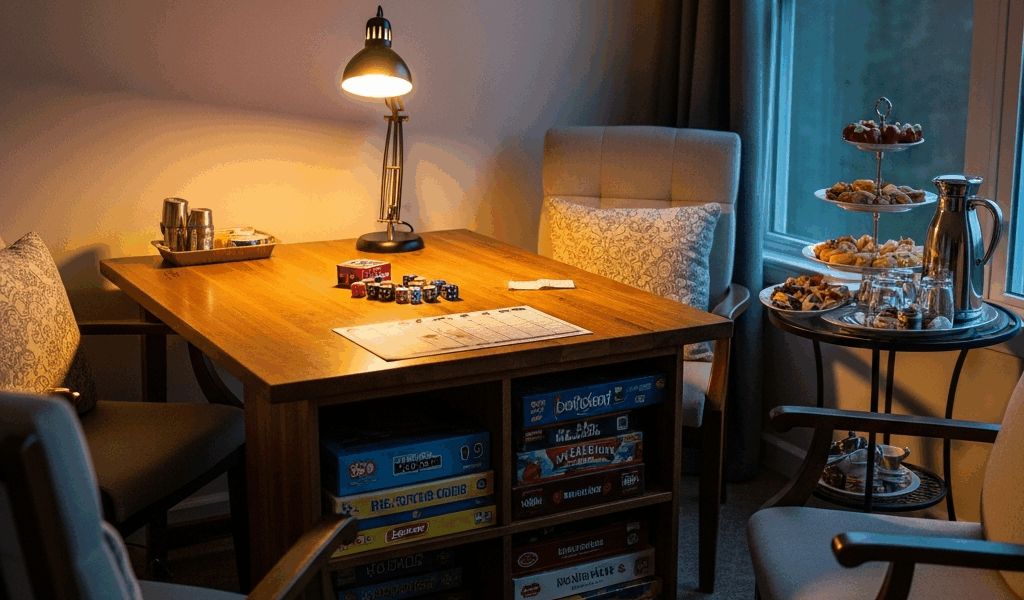
Why Game Hosts Need Dedicated Gifts
Finding the best gifts for board game enthusiasts who host weekly has gotten complicated with all the assumptions flying around. Most people think you need to buy another game. You don’t. After hosting 52 game nights a year, I learned everything there is to know about what hosts actually need — and it’s not more boxes on the shelf. It’s solutions to the logistical problems nobody talks about until you’re sitting at a table with six players reaching simultaneously for components.
Weekly hosting isn’t casual gaming. It’s a commitment that creates specific friction points. Your living room becomes a de facto game cafe. Players expect consistent setup times, readable gameplay, minimal confusion about turn order, and honestly, they expect you to be present and functional after three hours instead of exhausted. The person buying the gifts for a weekly host understands this — they’ve probably sat at that table and watched the host scramble for a pen that works, squint at card text under bad lighting, or spend ten minutes digging through a shoebox to find the missing expansion pieces mid-game.
Probably should have opened with this section, honestly, but it matters: the best gifts for board game hosts solve operational problems, not entertainment gaps. Storage that keeps games organized between sessions. Lighting that prevents eye strain across a four-hour Catan marathon. Comfort items that let the host actually enjoy hosting instead of counting down to when everyone leaves. Accessories that reduce arguments about scoring or turn order. These are the gifts that get used every single week, not the novelty dice set that sits on a shelf gathering dust.
Game Organization and Storage
Dealing with component overflow mid-game, I discovered that most board game storage solutions fail because they optimize for display, not access. A host needs to grab components fast, organize them during gameplay, and reset everything in minutes after everyone leaves. That’s a different problem entirely.
The Kallax 4×4 shelving unit from IKEA ($99.99) paired with IKEA Ivar drawer inserts ($29.99 each) is unglamorous. It’s also the workhorse that every weekly host needs. Each drawer holds one game vertically, and you can pull a drawer fully out to find pieces without moving the entire shelf. The system scales — add drawers as your collection grows. I’ve had friends with 80+ games in a 4×4 and they still find what they need in seconds. No browsing. No shuffling.
For mid-game organization during active sessions, the Feldherr foam tray system with wooden storage box ($84.99 for a mid-sized unit) works differently. These custom-cut foam inserts let hosts pre-organize expansions and components before the night starts. Player tokens go in one section, resource cubes in another, cards in a third. Nothing gets lost. Nothing gets shuffled back into the wrong box. This matters when you’re hosting eight-player games where people have short attention spans for component management — and frankly, where the host doesn’t have the bandwidth to enforce organization.
The ArtBin Super Satchel with rolling handle ($34.99) works for hosts who need portable storage. Especially if you run game night at different locations sometimes. It holds roughly six medium-box games and keeps everything accessible. The clear lids let players see what’s available without digging through containers.
Lighting and Atmosphere
Bad lighting ruins hosting. I didn’t realize this until my regular players started asking about card text repeatedly because the overhead light was creating glare on the table. Once I fixed the lighting, I stopped answering the same rules question four times per turn.
The BenQ e-Reading Lamp e-Ink ($79.99) sits perfectly behind or beside a gaming table. It uses flicker-free technology designed for extended viewing, and the flexible gooseneck positions light exactly where you need it without creating shadows. For hosts, this solves the problem of players leaning into card text or asking about game rules they could read themselves if visibility was better. One less interruption per turn means smoother gameplay and less fatigue for everyone — especially the host who’s already managing four other things.
For themed game nights or ambiance control, Nanoleaf Essentials Thread-enabled light strips ($49.99 for a starter kit) add programmable lighting around your game space. You can set warm tones for cozy games like Ticket to Ride, cooler tones for sci-fi games, or dim everything for horror-themed nights. This sounds frivolous until you’ve run a game night where the atmosphere actually matters to player engagement. Less talking at the table means fewer interruptions and disputes. Better mood means better gameplay. It’s not complicated.
The Brightech Ringlight with stand and phone holder ($39.99) works if your hosting space is smaller or you want something portable. Position it to illuminate the center of the table without blinding players. Adjustable from 3000K to 6500K — dial in exactly what the moment needs.
Comfort for Long Sessions
Three hours sitting upright while facilitating gameplay will destroy your back if you don’t have proper support. I learned this the hard way after hosting back-to-back games every Thursday night for two years. One lumbar cushion and everything changed.
The Bonded Leather Lumbar Support Cushion ($34.99) clips to almost any chair. It provides lower back support without requiring a special gaming chair purchase, and it’s portable enough to move between different seating areas. Hosts often end up sitting longer than any single player because they’re not just playing — they’re managing the experience. This cushion prevents the exhaustion that comes from poor posture during marathon sessions.
The Kensington SmartFit K55274US Memory Foam Seat Cushion ($44.99) addresses pressure points during long sessions. If you’re already sitting in a decent chair, this just makes it better. Hosts notice comfort more than players because hosts never leave the table.
The Bamboo Wooden Snack and Drink Organizer ($28.99) solves a hosting logistics problem that nobody mentions — managing food and beverages around a gaming table. It keeps drinks elevated and away from components, snacks in designated areas, and reduces cleanup time. This sounds minor until you’re five hours into a campaign game and someone’s knocked over their third drink of the night directly onto your game. Don’t make my mistake.
Neoprene Dice Trays with raised edges ($15.99-$25.99 depending on size) aren’t comfort items technically. But they solve the comfort problem of constant dice roll interruptions. Dice stay contained. No more crawling under tables. Hosts appreciate this more than casual players because they’re managing the physical space multiple times per hour.
Timers, Scorekeeping, and Accessories
Turn timers and scoring systems reduce hosting friction by removing ambiguity. When everyone agrees on the timer, there are fewer arguments about whose turn it is and when time expired. That’s what makes clear scorekeeping systems endearing to weekly hosts.
The Time Timer TWO 60-minute visual timer ($29.99) works better than phone timers because players can see exactly how much time remains without asking. This is specifically useful for real-time games like Galaxy Truckers or Speed Cups, but also for hosts who want to keep turns moving. The visual timer prevents the “You took too long on that turn” arguments that disrupt hosting flow. No ambiguity. No complaints.
The Scoreboard Companion app or a physical dry-erase scoreboard ($18.99 for a quality wooden one with markers) keeps everyone on the same page about points. For games where scoring is complex or tracking happens across multiple rounds, this lets the host reference scores without stopping gameplay. The wooden scoreboards look professional enough to add to your game space ambiance — they’re not just functional.
Custom player mats ($12.99-$19.99 per set depending on design) define each player’s action space and reduce confusion during complex turns. They’re especially useful in games like Wingspan or Spirit Island where turn actions are numerous. Less explaining what’s legal means the host spends less energy on rules clarification during that fourth hour when everyone’s tired.
Budget Picks Under $50
You don’t need expensive gifts to solve hosting problems. These items work because they address real pain points without breaking budget constraints.
- Stainless Steel 12-Pocket Hanging Organizer ($19.99) — Hang this near your game table to organize frequently-used accessories like dice, tokens, pen sets, and score pads. The pockets keep everything visible and accessible. Weekly hosts use this constantly because it eliminates mid-game searching. I’ve had the same organizer for three years and it’s still going strong.
- LED Desk Lamp with USB charging port ($24.99) — Provides functional lighting and charges phone/tablets for scorekeeping apps. This is a boring gift that hosts genuinely use every time they host. No glamour, pure functionality. That’s the whole point.
- Microfiber Cleaning Cloth Set for game components ($12.99) — After hosting 50+ nights yearly, component wear from finger oils becomes visible. These cloths keep cards and tokens looking new. It’s a “thinking about your hobby’s maintenance” gift that shows the giver actually understands hosting.
- Premium Pen Set designed for note-taking ($34.99) — Hosts need reliable pens for scoresheets, house rules notes, and rules clarification. A quality pen set means the host isn’t hunting for something that works mid-turn. Specific recommendations: Uni-ball Jetstream Prime five-pack ($16.99) or Lamy Safari set ($28.99 for three colors). Either one works. Both have worked for me.
These gifts won’t impress with novelty. They’ll impress because they show up in every game night and make the host’s life observably easier. That’s the whole point of gifting someone who hosts weekly — solve their actual problems, not the aspirational ones.




Stay in the loop
Get the latest suggest a gift updates delivered to your inbox.